From bladesmithing to precision machining: Highlands College student sharpens skills through hands-on learning
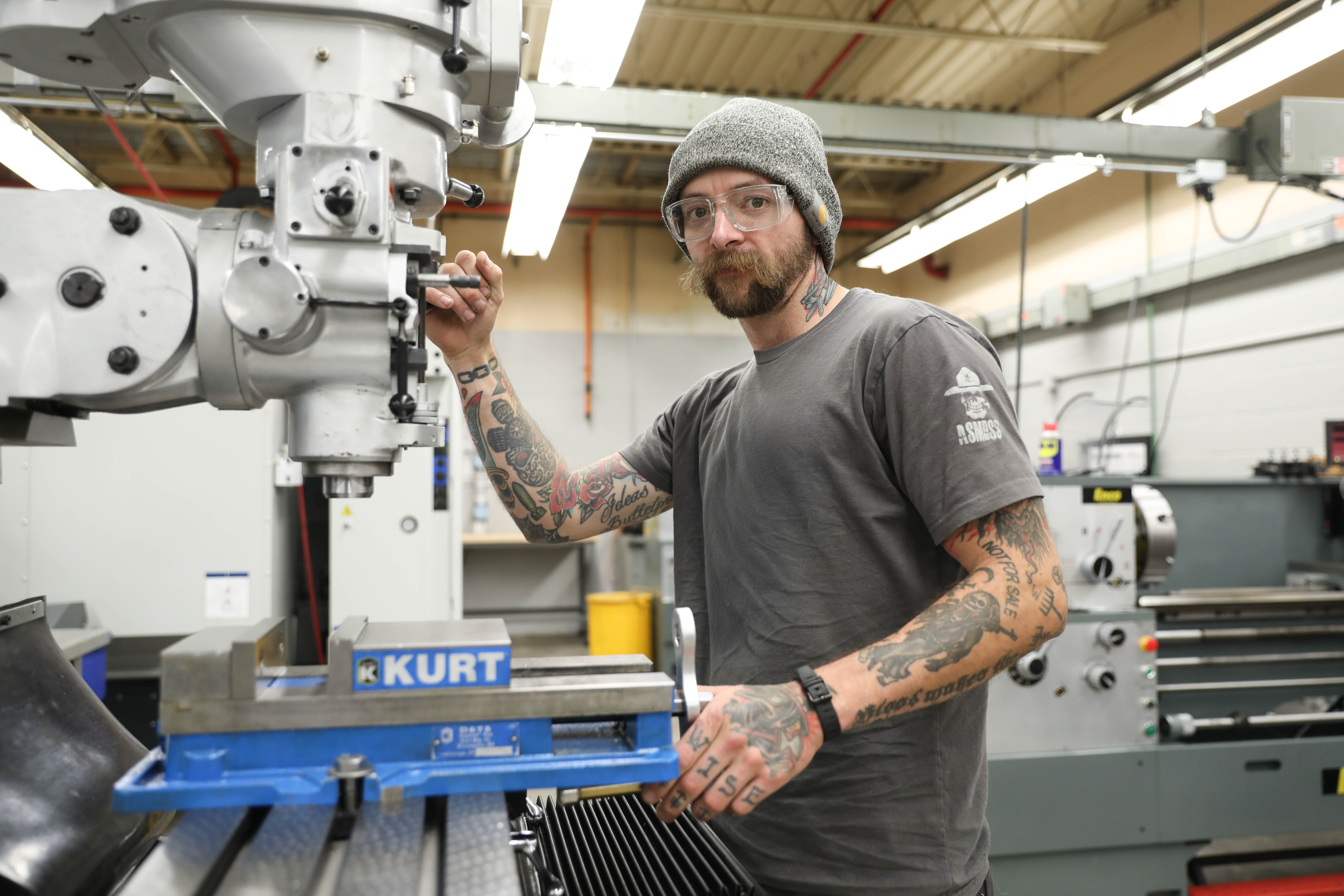
When Jesse Vosler made his first knife in 2018, he had little more than a $40 homemade forge and a determination to learn how to work with metal.
Using fire bricks, a welding tip and a hair dryer to get the forge hot enough to heat steel, Vosler began experimenting with bladesmithing. He watched YouTube videos, ordered books and learned through trial and error.
“It was pretty janky,” Vosler recalled. “I basically had no idea what I was doing.”
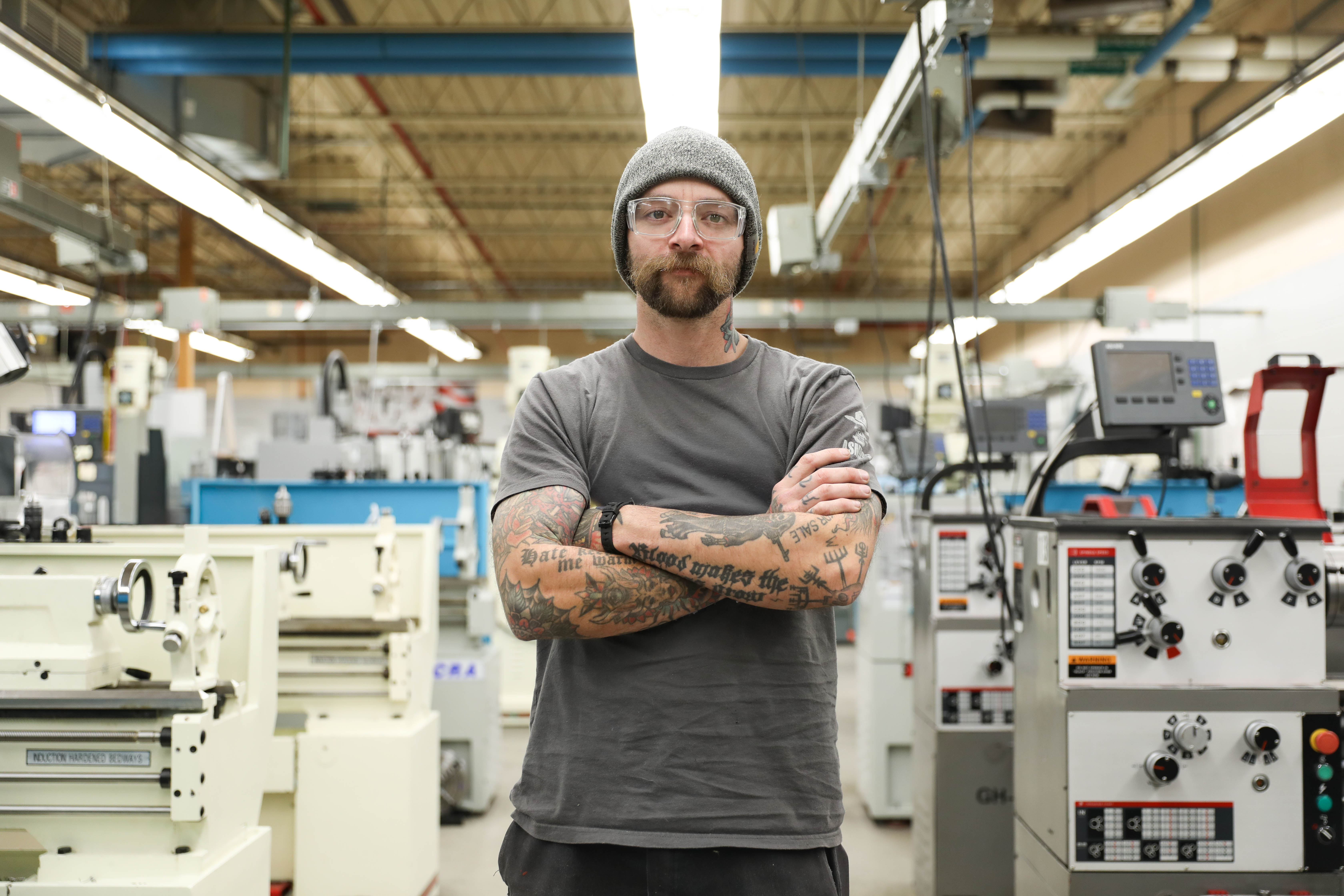
Eight years later, Vosler's handmade knives have found their way into butcher shops, hunting camps and even overseas via his business, Vigilante Forge. Now, the Marine Corps veteran and first-year Precision Machining Technology student at Highlands College of Montana Technological University is taking his metalworking skills to a new level.
Originally from Bozeman, Vosler lives in Whitehall, where he balances college coursework with a mobile butchering business, knife making, raising chickens and building a new home.
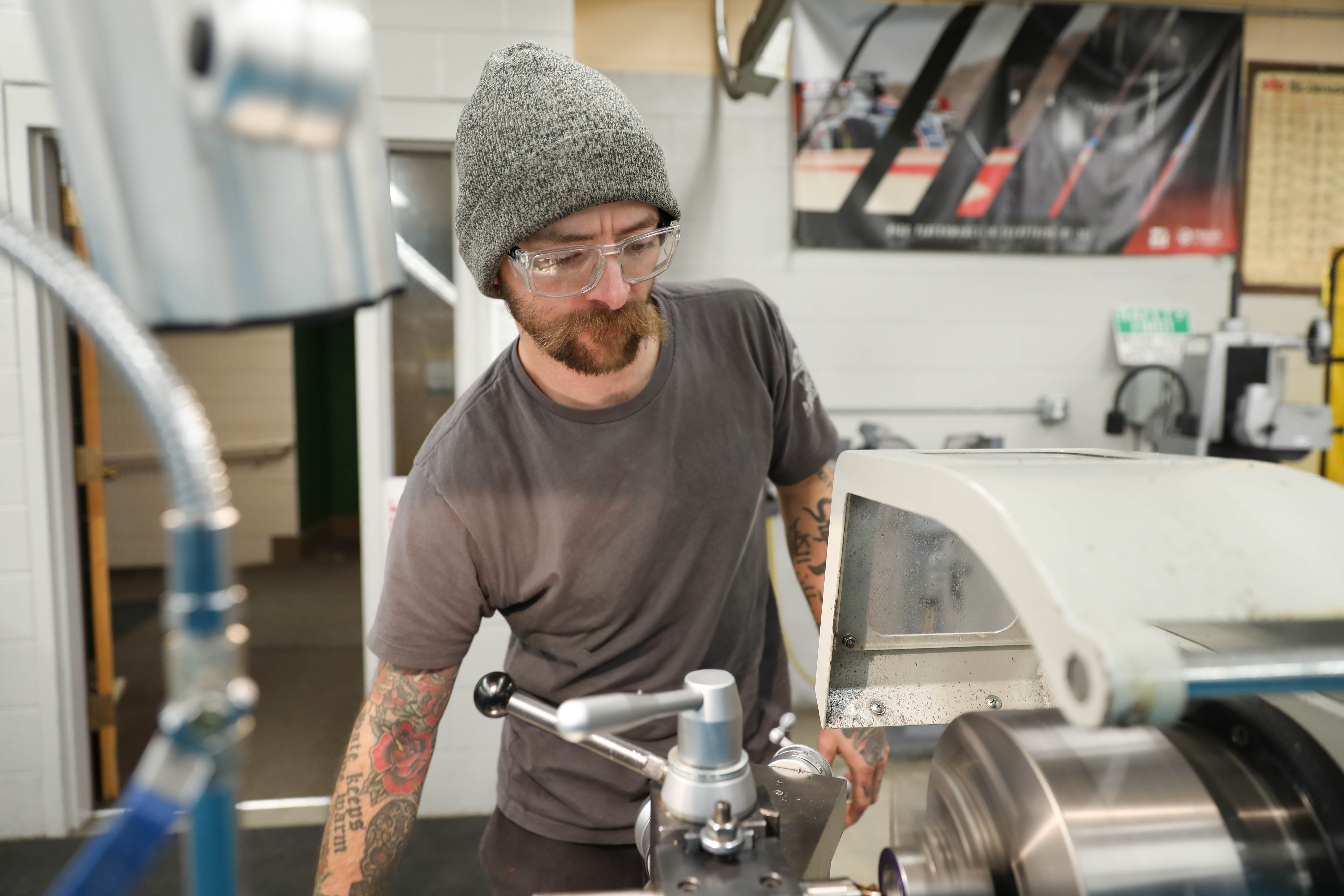
“I really just like working with metal and making stuff,” Vosler said.
Vosler's path to Highlands College was anything but traditional. After serving in the Marine Corps, he worked painting homes in Big Sky. When the COVID-19 pandemic shut down construction sites in 2020, he was laid off.
After a month of unemployment, Vosler learned that a friend of a friend had purchased a meat processing shop. Already experimenting with knife making, he saw an opportunity to learn more about how his creations performed in the real world.
“If I make knives, I want to figure out what they can actually do,” Vosler said.
The experience helped him better understand the differences between knives designed for skinning, slaughtering and breaking down meat. It also led to a career he never expected.
Although he grew up hunting, Vosler said he never imagined becoming a professional butcher. Today, he and his partner operate a mobile slaughter service, traveling to farms and ranches to process livestock. They also help teach customers how to process their own animals.
“Come to find out, it's actually my favorite thing to do,” Vosler said.
He takes pride in doing the work well, emphasizing respect for both the animals and the farmers who raise them.
That same attention to craftsmanship carries over into his knife making.
Vosler creates each knife by hand, often experimenting with different steels, handle materials and heat-treating techniques. One of his skinning knives features a handle made from layers of denim and epoxy compressed into a durable material known as Micarta.
The blade itself is made from W2 tool steel, which Vosler treats using a process that produces different levels of hardness along the blade and spine.
He even makes his own knife sheaths from heat-molded plastic, using a toaster oven and foam pads to shape them.
His work has attracted customers through word of mouth and Instagram. One knife has made its way to Germany, and Vosler is currently working on an order of eight knives destined for a professional hunter in Africa.
Despite his success, Vosler wanted to expand his abilities.
With education benefits available through the Department of Veterans Affairs' Veteran Readiness and Employment program, commonly known as Chapter 31, he began exploring opportunities to return to school.
A tour of Highlands College's Precision Machining Technology program convinced him he had found the right fit.
“The machining program was awesome,” Vosler said. “It would really benefit the knife making stuff, and making anything in general.”
Vosler is particularly drawn to manual machining, where students use equipment such as mills and lathes to shape metal into precisely measured components.
During a recent class, he was making a hammer head with threaded ends designed to hold interchangeable brass and plastic striking surfaces.
Although he enjoys learning about computer numerical control, or CNC machines, Vosler said he appreciates the hands-on nature of manual machining.
“The CNC machines are cool. I just like the manual stuff because it feels more personal,” he said.
For someone accustomed to making knives entirely freehand, learning to work within exact measurements and tolerances has opened new possibilities.
The program has also helped Vosler discover practical applications for subjects he once struggled to appreciate in school.
“I've never been a super awesome student, never really been super into school,” Vosler said. “When I was in high school and doing algebra and stuff, I could never get a straight answer of what algebra is actually used for.”
Now, he's using mathematics to calculate drilling depths, account for the angled tips of drill bits and ensure machined components meet precise specifications.
“Now I can connect it, and it's a lot more interesting, knowing that I can apply it to doing something that I like doing,” Vosler said.
He's already putting those skills to work outside regular class assignments.
When a trailer hitch adapter purchased for his girlfriend's new truck didn't fit properly, Vosler brought it to the Highlands College machining lab. He measured the part, calculated where the hole needed to be and used a milling machine to modify it.
The project allowed him to practice a machining technique he wasn't scheduled to learn until his third semester.
Instead of returning the part or purchasing another one, he was able to solve the problem himself.
For Vosler, those practical applications are what make the program valuable.
His long-term goal is to earn certification as a master smith through the American Bladesmith Society, a rigorous process that requires exceptional craftsmanship and technical ability.
He believes the precision and measurement skills he's learning at Highlands College will help him meet those standards while expanding the kinds of projects he can tackle.
“Add more tools to the toolbox,” Vosler said.
He also hopes more young people will consider precision machining as a career path, noting that the field doesn't always receive the same attention as other skilled trades.
“I think there are a lot fewer people who know about machining than welding,” Vosler said. “I think that should change because it's pretty important and really cool, honestly.”
For a student who started making knives with a $40 forge and no formal training, Highlands College is providing an opportunity to combine years of self-taught experience with new technical knowledge.
And whether he's making knives for customers overseas, repairing equipment at home or machining a new tool in the classroom, Vosler's motivation remains the same: the satisfaction of making something useful with his own hands.