From ambulance calls to DNA sequencing, Montana Tech student prepares for career in medicine
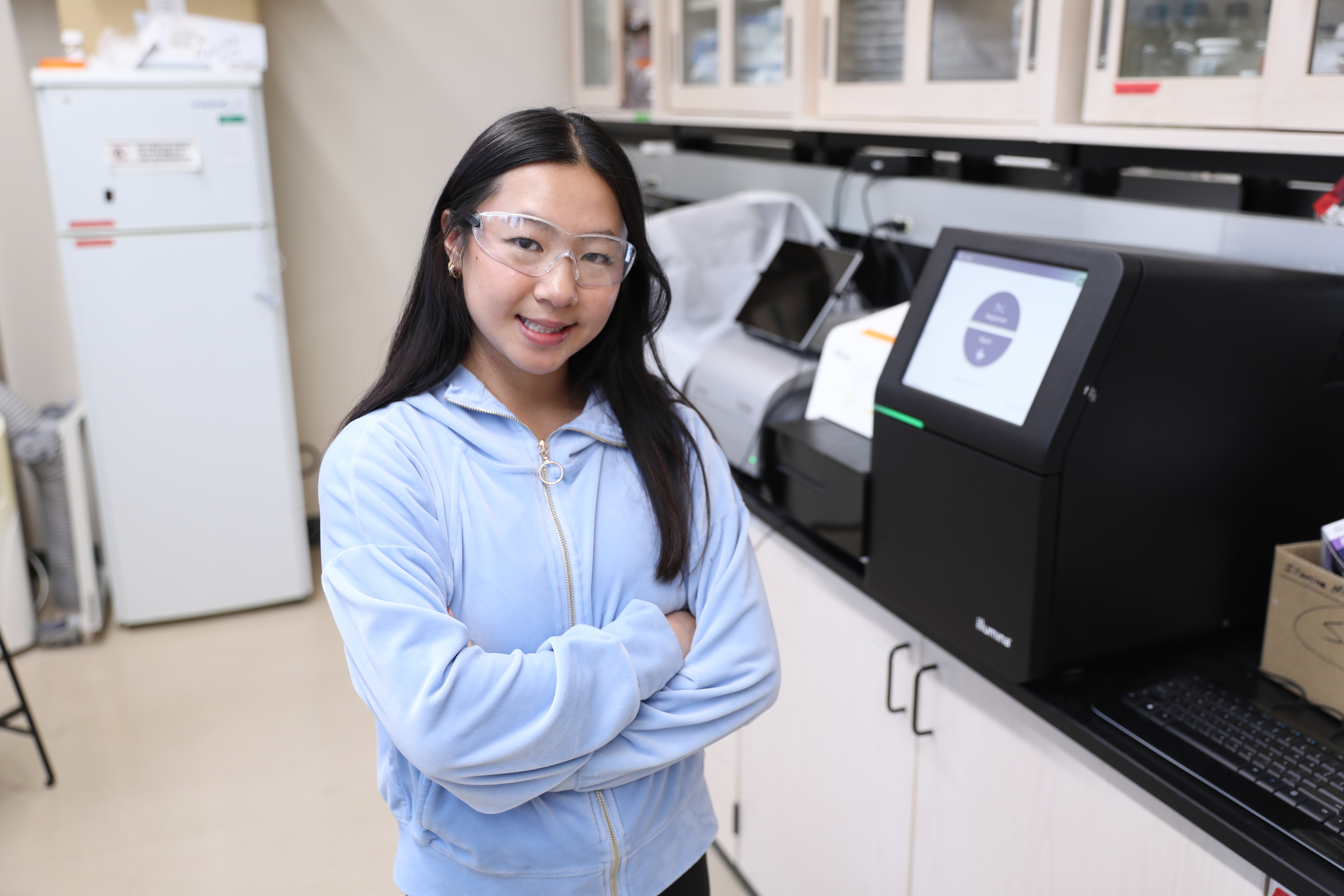
When Montana Technological University senior Millie Xing gets behind the wheel of an ambulance, she never knows exactly what the next call will bring.
As an emergency medical technician in Butte, Xing has come to expect the unexpected. Dispatch information doesn't always tell the full story. Sometimes her expectations are right. Other times, the situation is entirely different.
“You never know what's waiting for you,” Xing said.
The unpredictability is part of what she enjoys about the job. For Xing, a biological sciences major from Missoula who plans to attend medical school, the experience is providing something she can't learn entirely in a classroom: how to care for people during some of their most vulnerable moments.
Xing began working on the ambulance in late June after taking an emergency medical technician course at Montana Tech. She typically works 24-hour shifts, often on weekends, while balancing her senior-year coursework and undergraduate research.
The job is helping her accumulate clinical experience for medical school applications, but Xing said it has also taught her valuable lessons about interacting with patients.
“You don't think you're going to learn that much in such a short amount of time being with a patient because you're really only with them for 10 or 20 minutes,” Xing said. “But you do learn how to interact with them and what they're experiencing.”
The experience has also opened her eyes to barriers that prevent some people from receiving adequate health care. She has encountered patients experiencing homelessness, financial difficulties and challenges accessing necessary medications.
“I want to be somebody that people can go to and rely on for their care and for their health decisions,” Xing said.
That desire to help others has guided Xing's academic journey, which began with an interest in health care during high school.
Although both of her parents work at the University of Montana, Xing wanted to attend college somewhere she could establish her independence. She initially enrolled at Gonzaga University before transferring to Montana Tech, drawn by its small classes and opportunities to develop relationships with professors.
“I like having a small school, so you can interact with the teachers or your professors,” Xing said. “When they know you and you know them.”
Those connections have opened doors to undergraduate research opportunities that have allowed Xing to work with advanced genetic sequencing technology.
For her senior thesis, Xing is working with Montana Tech Biological Sciences Professor Dr. Amy Kuenzi to sequence DNA from Bartonella, a group of bacteria associated with diseases including cat scratch disease. Different species of the bacteria can infect different mammals and cause different illnesses.
The project builds on years of research involving blood samples collected from mice across Montana. Previous students extracted DNA from the samples and tested them for the presence of the bacteria. Xing's task was to develop a process for preparing those samples for sequencing using Montana Tech's Illumina Miseq machine.
The technology allows researchers to analyze genetic material from numerous samples in a single run, dramatically reducing the time required compared with traditional sequencing methods.
Xing and the research team prepared more than 60 samples for sequencing, a process that took approximately 48 hours once the machine was running.
Getting to that point, however, required months of troubleshooting.
Because the laboratory did not have an established protocol for preparing the samples, Xing spent much of the summer developing one. Her initial approach produced unreliable results, requiring her to reconsider the process and try again.
“It was really frustrating at first because it's hard to do something when you don't really have a protocol for it when you're trying to figure it out,” Xing said. “But once we figured that out, it was really cool to see all the results.”
The research could help scientists better understand which species of Bartonella are present in different geographic areas by comparing genetic sequences with the locations where the mice were collected.
For Xing, the opportunity to work with sophisticated technology as an undergraduate has been particularly rewarding.
“Next-generation sequencing is a really cool new technology,” Xing said. “It was fun to get to play with that as an undergrad.”
Although she isn't certain genetics will become her medical specialty, the experience has strengthened her scientific skills and given her an appreciation for the persistence required in research.
Xing is scheduled to graduate in May 2027 and plans to take a gap year before medical school. She has already completed the Medical College Admission Test, or MCAT, after spending approximately five months preparing for the seven-hour exam.
She plans to apply to approximately 15 medical schools, with the University of Washington's WWAMI medical education program among her top choices.
Xing is particularly interested in obstetrics and gynecology. Her goal is to become a physician who provides patients with not only quality medical treatment but also compassion, understanding and a sense of security.
“I want to be that source of comfort where people can come to me, trust me, know that I have their best interest at heart, and really be able to provide the care they deserve,” Xing said