Tracking tomorrow's threats: Montana Tech researchers study the future of zoonotic diseases
When scientists look to the future of medicine and emerging threats to human health, zoonotic diseases, or illnesses that transfer from animals to humans, stand out as a major concern. According to the World Health Organization, 60% of emerging infectious diseases worldwide originate in animals. Of the more than 30 new human pathogens identified in the past three decades, 75% came from animal populations.
At Montana Technological University, decades of research have helped build a foundation for understanding how and why those diseases emerge, and what humans can do to better protect against them.
Dr. Amy Kuenzi, head of the Department of Biological Sciences, was a doctoral student at the University of Arizona when a mysterious respiratory illness struck the Four Corners region in 1993. Scientists soon identified the cause as Sin Nombre hantavirus, carried by deer mice. The need to learn more about the virus was paramount. According to the Centers for Disease Control (CDC),by December 31, 1993, 53 cases had been reported, with 32 patients (60% of cases reported) dying.
Kuenzi's advisor received emergency funding from the CDC to begin screening small mammals for the virus.Kuenzi joined the effort—work that would ultimately shape her career. Nearly three decades later, she is still studying disease dynamics in Montana's deer mouse populations, building the state's longest-running dataset on hantavirus prevalence.
"To really understand the dynamics within those populations, you need to look at them over fairly long periods of time," Kuenzi said. "That's the beauty of long-term studies. You can ask a lot of different questions using data that's been collected over many years."
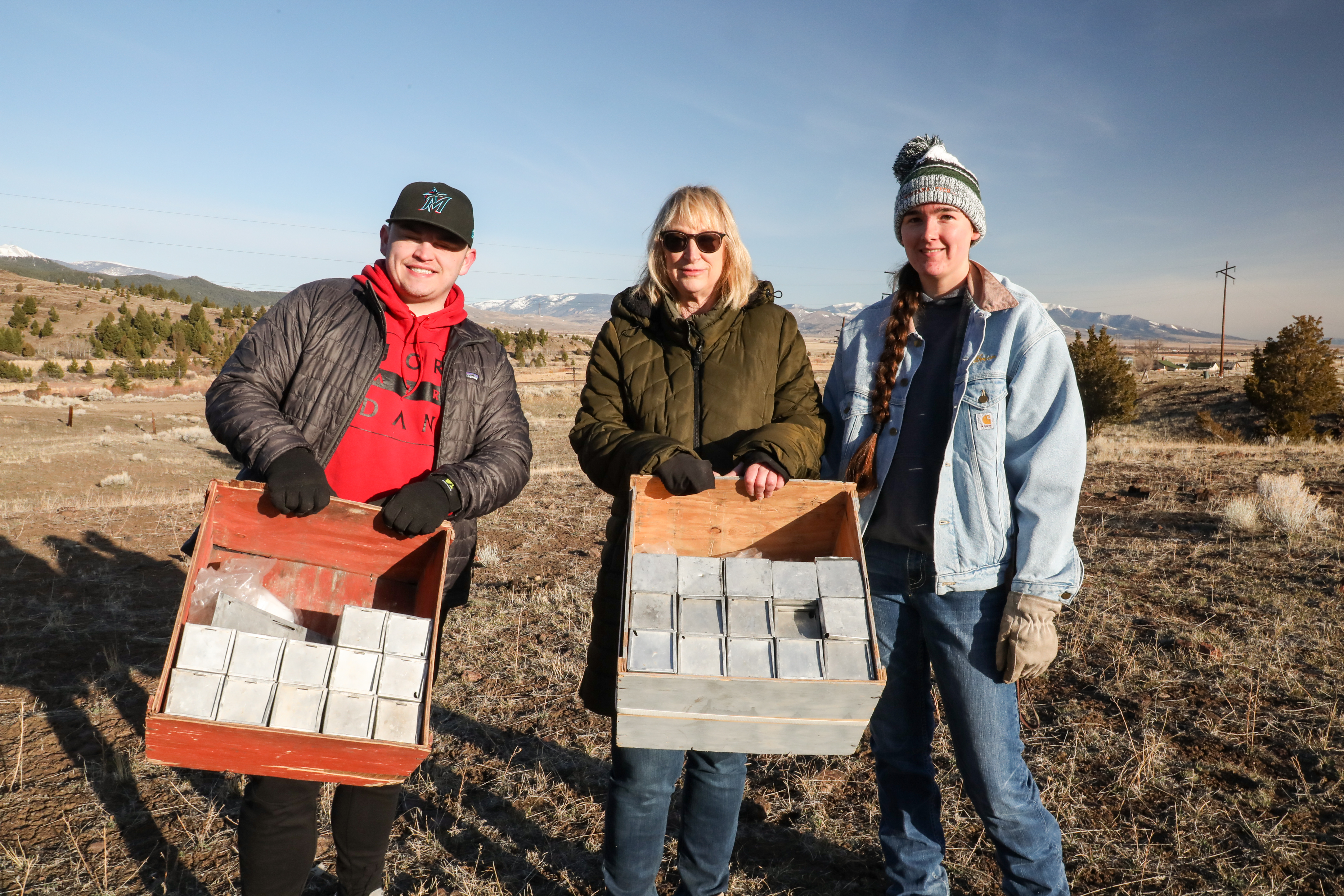
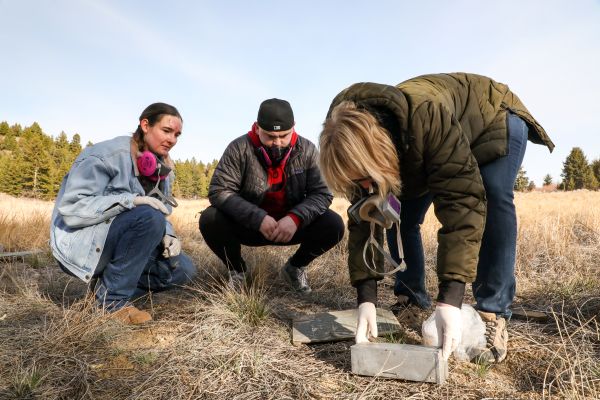
The research begins long before lab analysis. In the late afternoon, Kuenzi and her students hike into study sites in various parts of Montana, carrying stacks of small metal live traps baited for deer mice. The traps are set in grids and left overnight while the nocturnal mice are active.Early the next morning, the team returns to check each trap, following guidelines from the American Society of Mammalogists and Institutional Animal Care and Use Committee (IACUC) at the University of Montana.
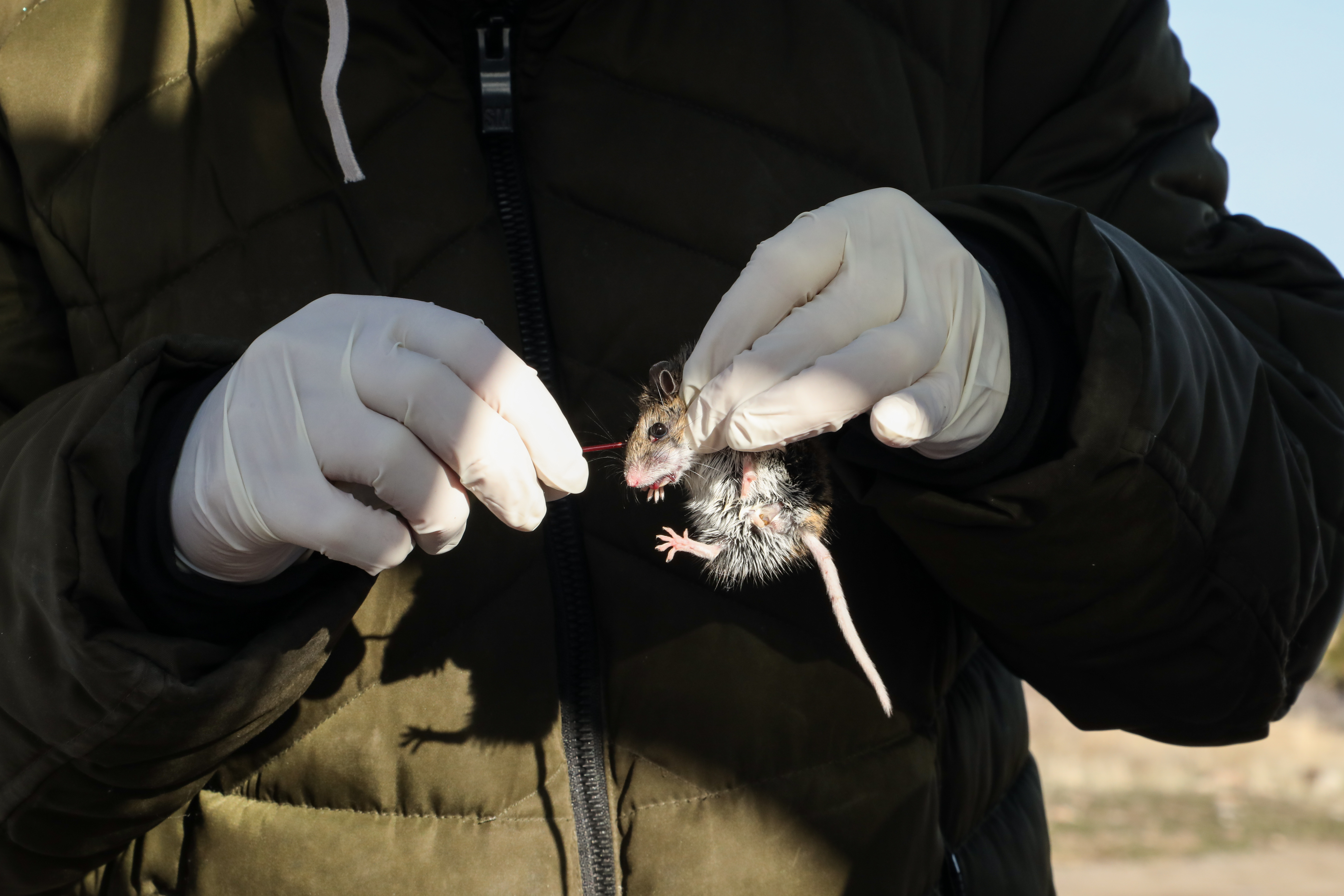
Because hantavirus can be transmitted through aerosolized virus particles shed in rodent urine, feces, or saliva,safety is paramount. Students wear gloves and fitted respirators while carefully handling each mouse. The animals are removed from the traps, ear tagged, weighed and measured, and a small blood sample is collected.Equipment is disinfected continuously throughout the process. Once processing is complete, the mice are released back into their habitat.
"Fieldwork is fun when the weather is really nice, but it can be really hard, too," Kuenzi said. "A couple of years ago, we had a huge population spike in mice, and we also had a spike in hantavirus prevalence. It was really physically hard when you have a lot of mice to process in the summer heat."
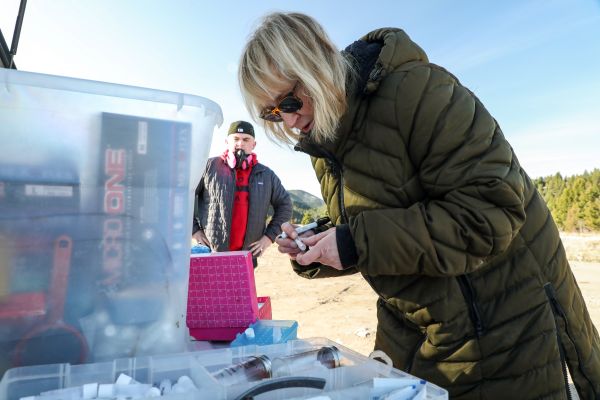
Samples are immediately placed on dry ice in the field and later transferred to laboratory freezers for long-term storage. In the lab, students test the blood for antibodies, extract DNA, and screen for pathogens. Some samples, preserved for years, are revisited with new techniques and new research questions—allowing today's students to generate discoveries from data collected years earlier.
Today, Kuenzi's long-term research is expanding. Using archived blood samples collected from across Montana, Kuenzi is working with Dr. Katie Hailer and students to screen for Bartonella, a genus of bacteria linked to illnesses such as cat scratch disease and trench fever.
"Nobody's ever looked for Bartonella in rodent populations in Montana," she said. "We found it at most locations—we just don't know what species it is yet. This summer, we'll have a student sequencing that DNA to determine what species we have, which will also be interesting because no one's done that in Montana before."
Kuenzi's work also extends beyond Montana Tech through a long-standing collaboration with researchers at the University of Montana. She partners with Dr. Angela Luis, a disease ecologist and modeler, who helps analyze the extensive dataset collected from Montana's deer mouse populations. Together with several University of Montana Ph.D. students, the team uses weather data, population trends, and infection rates to model how environmental conditions influence disease prevalence.The goal is not only to understand past outbreaks, but to determine whether future spikes in infection can be predicted. By combining hands-on field research with advanced statistical modeling, the collaboration expands the impact of Montana Tech's long-term data and brings new dimensions to the study of zoonotic disease dynamics.
In 2023, Kuenzi and Luis published a paper in Royal Society Open Science that examined how food availability influences social contact among deer mice. They concluded that intervention methods such as rodent proofing and proper food storage could be important to preventing disease spillover to humans, as it applies to not only Sin Nombre hantavirus, but also to other pathogens carried by rodents around the world.
The research not only deepens understanding of zoonotic disease in the region but also trains the next generation of scientists. Students learn field sampling, molecular lab techniques, and data analysis—hands-on experiences that often shape their futures.
"I've had so many different students work on this project over the years, and it's gotten a lot of students excited about both science and health care professions," Kuenzi said. "We've had students go on to vet school, med school, dental programs, PA programs—some have gone into research. I'm proud that I've been able to get students excited about science and research."
The work may begin with trapping mice before sunrise and carefully processing samples in respirators and gloves, but its implications stretch far beyond rural fields in Montana.
"Science is important," Kuenzi said. "It might seem silly spending decades trapping mice, but they can give us a lot of understanding about diseases, disease dynamics, and how the environment influences those diseases."