Montana Tech launches nuclear energy certificate, master's program
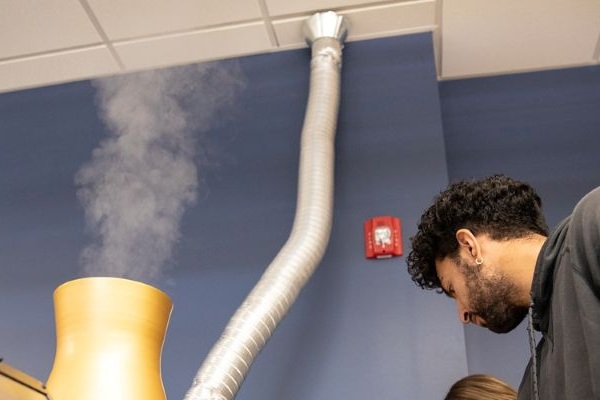
Montana Technological University is offering two new programs focused on nuclear energy, including an undergraduate certificate in nuclear energy and Master of Science in Nuclear Energy.
The programs were approved by the Montana Board of Regents in March 2026, and are designed to build a workforce that will lead Montana’s energy future.
"Montana is at an energy crossroads," Lance Energy Chair Bob Morris said. "We've been a net energy exporter for 50 years, but as coal comes offline, we risk no longer producing enough energy for ourselves."
Morris is a member of Governor Greg Gianforte's Unleashing American-Made Energy Task Force. Gianforte's office has noted electricity demand is expected to increase 20% in the next decade. The task force helps the legislature and Gianforte's office utilize domestic resources to meet those projected energy demands.
Morris says a major issue on the horizon is the projected financial end of life for the Colstrip power plant in 2042. Montana will need reliable replacement power sources to meet growing energy demands, and nuclear energy can play a key role in providing affordable, carbon-free electricity while helping maintain grid reliability.
“We need to develop the expertise, the workforce, and the technology for nuclear energy—and we need to do it in about 16 years, which is not a very long time,” Morris said.
The programs are meant to pair with Montana Tech's already strong engineering curriculum and offerings.
"This isn't about creating a campus full of nuclear engineers," Morris said. "It's about supplementing our existing engineering degrees with nuclear expertise. Even a little bit of nuclear training makes students extremely attractive candidates—it gets their foot in the door. I want our mechanical, civil, electrical, petroleum, and even safety students to leave here with a working knowledge of nuclear energy."
The undergraduate certificate consists of nine credits, while the Master of Science Program has 31-credit and 36-credit options, depend upon whether the student wants to complete a thesis or non-thesis track. Students will not handle nuclear materials on campus, but instead will complete hands-on portions of the program through simulation or a partnership with Idaho National Labs, the nation’s nuclear energy laboratory, located in Idaho Falls, Idaho.
“The program was designed for anyone who wants to enter the nuclear energy industry,” said Rick LaDouceur, associate professor of mechanical engineering and director of Montana Tech's Center for Energy Technologies. “It provides a pathway for scientists, engineers and other STEM professionals to develop expertise in a rapidly growing field while giving Montana Tech students access to the knowledge and facilities available through our partnership with Idaho National Laboratory.”
"The Graduate School at Montana Tech is pleased to add this new program to its offerings,” Director of Graduate Enrollment Jesse Taylor said. “It will provide students with valuable opportunities in an emerging field."
Montana Tech will enroll students in Fall 2027. To apply as an undergraduate, click here. Graduate applications are also available here.