Montana Tech Wraps Up Inaugural Summer Environmental Engineering Camp
23 high school students from six states spent a week living, learning and designing like environmental engineers
 Montana Technological University's Environmental Engineering Department has wrapped up its inaugural Summer Environmental Engineering Camp (SEEC), a six-day residential program held July 26–31 on the Montana Tech campus. Twenty-three high school students from Montana, Colorado, California, Virginia, Washington and Idaho took part in the all-expenses-paid camp, living in the dorms, eating at the Student Union Building and getting a hands-on introduction to environmental engineering.
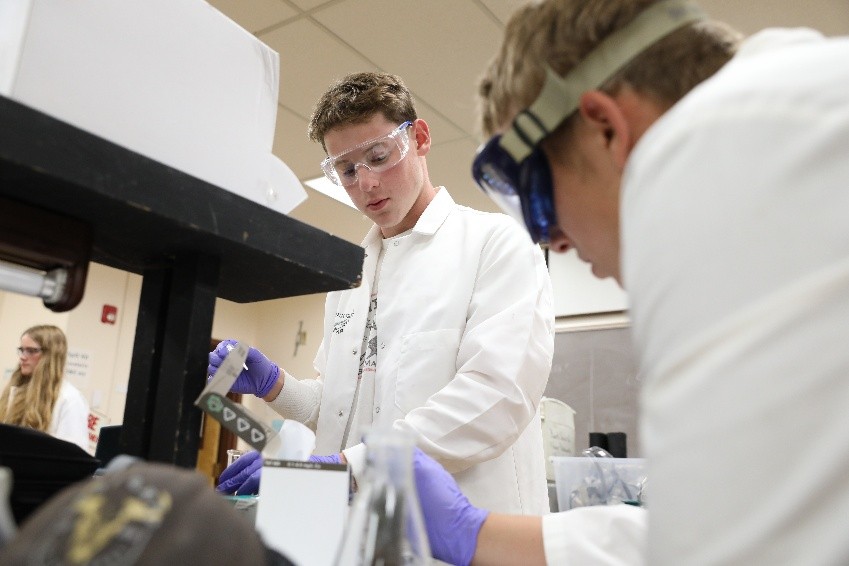
Campers test water-treatment prototypes in the lab as part of the Emergency at Granite Pass design challenge.
"This camp was everything we hoped it would be," said Dr. Raja Nagisetty, chair of Montana Tech's Environmental Engineering Department and the camp's lead organizer. "Twenty-three students spent a week living like both environmental engineers and college students at the same time, and you could see it click for them, in the field, on our industry visits, in the design challenge, and in the friendships they built. That's exactly the kind of spark this program is meant to ignite."
The camp was built around a simple idea the department shared with campers and families on their first evening: this would be "environmental engineering, plus" — real environmental engineering, and a real taste of college life. Over the course of the week, students explored what environmental engineers do, why the field is a strong career choice, and what it is like to live and study on a college campus.
Hands-on learning took campers well beyond the classroom. They toured Montana Resources, an active open-pit mine, and a wastewater treatment lagoon; went underground for a firsthand look at phytomining; explored the Butte Superfund restoration by bicycle; and joined a trolley tour of Butte's Historic District. Campers also flew real research-grade drones, including Wingtra fixed-wing mapping flights, DJI Mavic 3M solo flights and hands-on time with a Matrice 300.
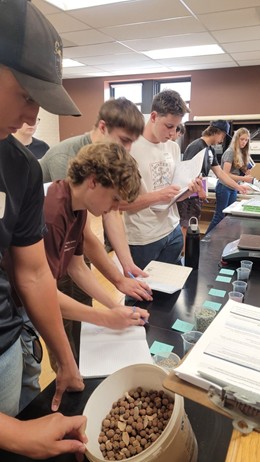
Campers work through their design challenge prototypes in the lab.
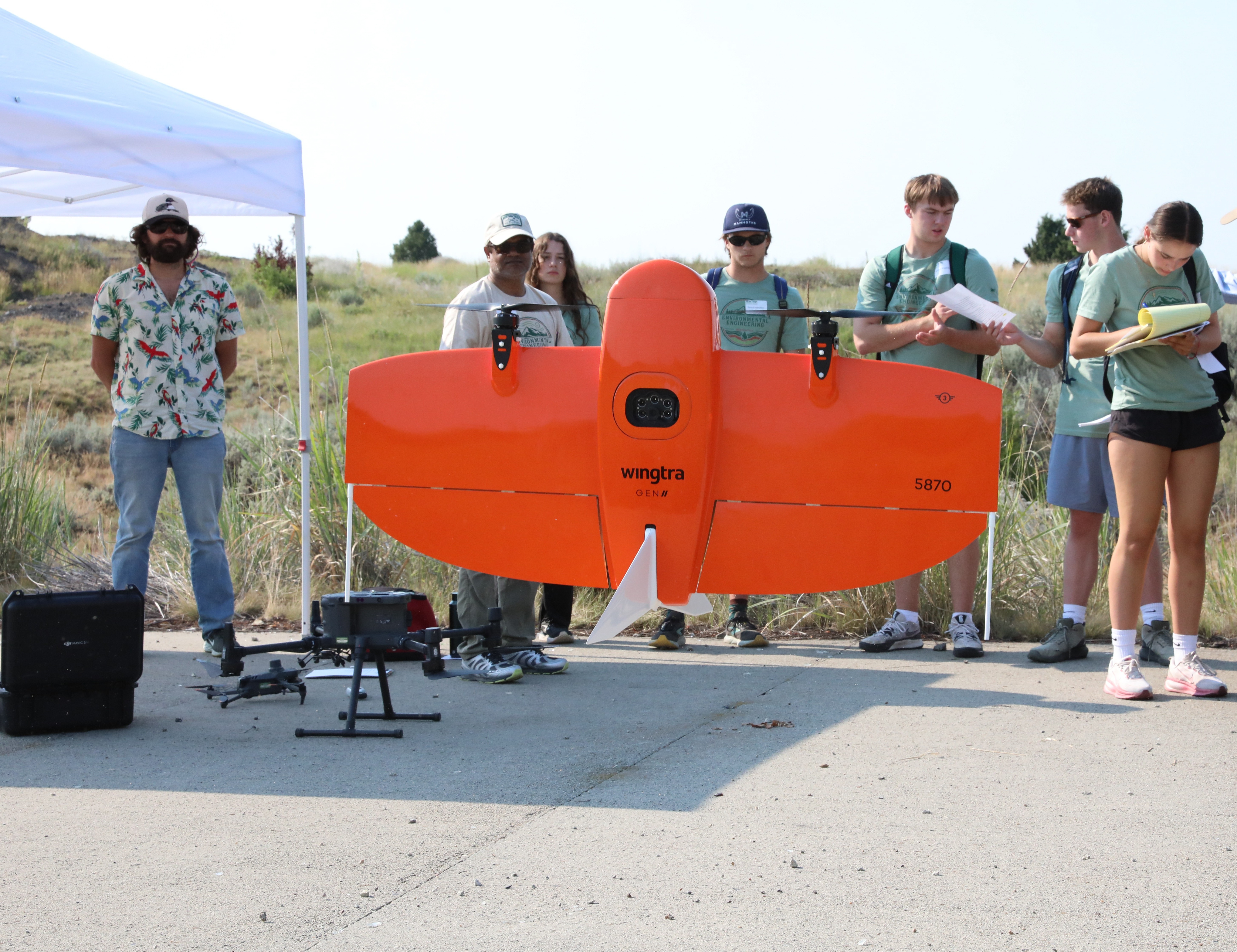
Campers learn about collecting multispectral data using Wingtra fixed-wing drone.
Emergency at Granite Pass
The centerpiece of the week was a team engineering design challenge, "Emergency at Granite Pass," built around a fictional restoration camp. Divided into six teams, campers designed either a portable air-treatment system to remove smoke and particles, or a water-treatment cartridge to remove copper and reduce turbidity from stream water. Each team worked through a full, five-step engineering design process — investigate, prototype, test and optimize, document, and present — before pitching their solution to a judging panel on the final morning. Awards were presented in four categories: Best Overall Engineering Solution, Best Technical Performance, Best Use of Resources, and Best Engineering Communication.
"We wanted every team to live through a complete engineering design cycle, not just hear about one," said Dr. Dave Hutchins, faculty in Montana Tech's Environmental Engineering Department and the camp's co-lead, who designed the Granite Pass challenge. "From literature review to a ten-minute pitch in front of a judging panel, these students did the same work practicing environmental engineers do every day, and they did it as a team."
The camp closed with a banquet on July 31 attended by Montana Tech Chancellor Johnny MacLean, Provost Tim Elgren and Dean Jack Skinner, who joined department faculty and staff in congratulating the campers on their work.
A Department-Wide Effort
The camp was organized by Montana Tech's entire Environmental Engineering Department. Dr. Nagisetty served as lead, with Dr. Dave Hutchins, who designed the Granite Pass engineering challenge, serving as co-lead. Melissa Bolton, the department's program manager, served as co-lead and managed camp logistics. Faculty members Dr. Robin Bullock and Dr. Naim Rashid led several field and lab sessions. Eight Montana Tech students served as camp mentors, supporting campers from breakfast through evening activities.
Why Environmental Engineering
Camp organizers also used the week to introduce students to environmental engineering as a career path. According to the U.S. Bureau of Labor Statistics, the median U.S. pay for environmental engineers was $104,170 in 2024, and U.S. News & World Report ranks it the 7th-best engineering job in the country. Montana Tech's Environmental Engineering Department reports 100% career outcomes, with nearly every student completing an internship, and graduates go on to work in industry, consulting and government.
Montana Tech offers a range of scholarships to incoming students, and the Environmental Engineering Department offers an additional $2,000 scholarship to freshmen students pursuing environmental engineering degree: $1,000 during freshman year, and the remaining $1,000 during the Sophomore year.
Given the success of this year's program, the department is already planning to bring the Summer Environmental Engineering Camp back next summer.
About Montana Tech's Environmental Engineering Department
Montana Technological University's Environmental Engineering Department prepares students to apply engineering solutions to environmental challenges, with hands-on experience in water resources, air quality, remediation and sustainable industry. The department is based in Butte, Montana, home to one of the nation's largest Superfund restoration sites and a living laboratory for environmental engineering education.
Media Contact:
Dr. Raja Nagisetty, Chair, Environmental Engineering Department
Montana Technological University
RNagisetty@mtech.edu