Montana Tech to host Iron and Steelmaking Days, connecting students with industry
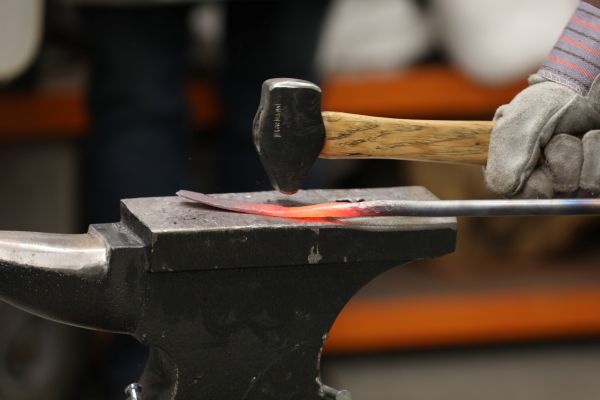
Montana Technological University will host Iron and Steelmaking Days on February 17-18, 2026, in the Student Union Building. The event is a new campus-wide event designed to introduce current students to careers, research, and hands-on experiences in iron and steel production—one of the world’s most essential and fast-growing industries.
The event is organized by Basak Anameric, Montana Tech’s Nucor Professor, and is supported through the American Iron and Steel Institute of Technology (AIST) Foundation’s Kent D. Peaslee Junior Faculty Award. The award is intended to strengthen iron and steelmaking education on university campuses and to spark student interest in metallurgy and related engineering fields.
“I am honored and humbled to receive the AIST Foundation, 2025-2026 Kent D. Peasle Junior Faculty Award,” Anameric said. “This recognition reflects the partnership between iron and steel industry, AIST, Montana Tech, and its students. Dr. Peaslee was a champion for education, research, and industry partnership. I will carry the torch he lit, encouraging the next generation of engineers to serve in iron, steel and supporting industries.”
“This award is about bringing more iron and steelmaking to Montana Tech and getting students excited about metallurgy,” she continued. “The first step is connecting students directly with industry—hearing what employers want, seeing how steel is made, and understanding the range of opportunities available.”
Iron and steel producers and supporting industries such as Nucor, Steel Dynamics and Opta already recruit Montana Tech graduates, but Anameric hopes the event will broaden those connections and expose students to additional employers, technologies and career paths.
“Steelmaking isn’t just for metallurgy and materials science students,” Anameric said. “Mechanical, civil, environmental and electrical engineers, welders, designers and construction professionals all play major roles. We want students from across campus to see where they fit into this industry.”
Iron and steelmaking remains a global growth industry, producing nearly two billion metric tons annually and supporting everything from infrastructure and renewable energy to transportation and manufacturing. Entry-level salaries for steel industry positions are often higher than average engineering starting wages, and the industry offers long-term career mobility across different technologies and facilities.
Iron and Steelmaking Days will feature a full slate of activities aimed at both learning and networking, including:
- Lectures from industry professionals
- A roundtable discussion with students, faculty and industry representatives on what employers are looking for in today’s workforce
- AIST presentations on student scholarships and internship opportunities
- Hands-on laboratory demonstrations
- Lunch and a social hour with industry professionals
- Industry partner information sessions and a mini career fair
The roundtable discussion is one of Anameric’s most anticipated components of the day.
“When I was an undergraduate, I constantly wondered if I was doing the right things to become a good engineer,” she said. “This is a space where students can ask those questions directly and get honest feedback from industry professionals.”
Laboratory demonstrations will showcase iron and steelmaking concepts in action—an experience Anameric credits with sparking her own passion for the field.
“Seeing molten metal for the first time is unforgettable,” she said. “That orange glow hooked me. I hope these demonstrations help students feel that same excitement.”
In addition to current Montana Tech students, Anameric hopes to expand the program in future years to include K–12 outreach, introducing younger students to metallurgy and engineering before they choose a college major.
“Many students pick a major without fully understanding what it involves,” she said. “If they learn about metallurgy early, they may discover an interest they didn’t know they had.”
Iron and Steelmaking Day is open to students across disciplines, with no attendance cap. Demonstration sessions will scale based on interest, allowing more students to participate as registration grows.
“I want students to walk away with something useful—whether that’s career advice, a new industry contact, or a clearer picture of their future,” Anameric said.
By bringing industry leaders, faculty and students together in one space, Montana Tech aims to strengthen its role as a pipeline for the iron and steel industry while giving students practical insight into one of engineering’s most enduring fields.
For students considering careers in engineering, skilled trades or manufacturing, Iron and Steelmaking Day offers a chance to see how classroom learning translates into real-world impact—and how steel continues to shape the modern world.
To register, click here.
Students can complete a survey here before the event to submit questions for the roundtable discussion.
Full schedule:
February 17, 2026
Time & Location Topic/Speaker
| 8:00 – 8:15 a.m., SUB 212, Big Butte | Montana Tech Iron and Steelmaking Day Introduction and Welcome Dr. Basak Anameric, Assistant Professor, Department of Metallurgical and Materials Engineering |
| 8:15 – 9:00 a.m., SUB 212, Big Butte | Decarburization of the Iron and Steel Industry Jose Lujan, Vice President, Strategy, R&D, Opta Group |
| 9:00 – 9:15 a.m., SUB 212, Big Butte | Coffee Break |
| 9:15 – 10:00 a.m., SUB 212, Big Butte | Alloy Design to Support Decarburization and Electrification Efforts Drew Kofahl, District Technical Services Manager, Nucor |
| 10:00 – 10:15 a.m., SUB 212, Big Butte | Coffee Break |
| 10:15 – 11:15 a.m., SUB 212, Big Butte |
Association for Iron and Steel Technology (AIST) Scholarships and Opportunities, and Students’ Experience Shared Courtney Young, AIST Student Program Administrator |
| 11:15 – 11:30 a.m., SUB 212, Big Butte | Lunch service |
| 11:30 a.m. – 1:30 p.m., SUB 212, Big Butte |
Round Table Discussion – What is the industry looking for in engineers and professionals?
|
| 1:30 p.m. – 2:00 p.m., ELC 117, Iron and Steelmaking Laboratory | Ribbon-cutting and celebration |
| 2:00 p.m. – 5:00 p.m., ELC 117, Iron and Steelmaking Laboratory Demonstrations | Briquetter and Improving Properties of DRI Briquettes by Abigail Clark Reduction Under Load Test Set-Up and Production of Cold Bonded Briquettes for DRI production by Steven Foster Induction Furnace by Daniel Ziesing Hydrogen Evaluation from Molasses Bond DRI Briquettes by Gabriel Marquis Metallography by Addison Cross, Abigail Clark, and Grace Ekness Optical Microscopy by Stephen Hanson Casting by Addison Cross and Daniel Ziesing Blacksmithing by Carson LeLacheur and Justus Peterson |
| 4:00 p.m. – 7:00 p.m., ELC 2nd Floor Commons | Social Hour and Appetizers |
February 18, 2026
Time & Location Topic/Speaker
| 8:00 – 8:45 a.m., SUB 113, Kelley Steward | Alloy Design Part of the EMET 420 Physical Chemistry of Iron and Steelmaking Lecture Series Drew Kofahl, District Technical Services Manager, Nucor |
| 8:45 – 9:00 a.m., SUB 113, Kelley Steward | Coffee Break |
| 9:00 – 9:45 a.m., SUB 113, Kelley Steward | Iron and Steel Treatment – Sulphur Removal Part of the EMET 420 Physical Chemistry of Iron and Steelmaking Lecture Series Jose Lujan, Vice President, Strategy, R&D, Opta Group |
| 9:45 – 10:00 a.m., SUB 113, Kelley Steward | Coffee Break |
| 10:00 a.m. – 12:00 p.m., SUB 113, Kelley Steward | Discovery – Nucor Collaboration, Virtual Steel Mill Tour Daniela Perez, Technical College Recruiter, Nucor |
| 12:00 – 1:30 p.m., SUB 113, Kelley Steward | Lunch Service |
| 1:30 p.m. – 2:30 p.m., SUB 113, Kelley Steward | Role of Civil Engineers and Professionals in the Iron and Steel Industry |
| 2:30 p.m. – 3:30 p.m., SUB 113, Kelley Steward | Role of Electrical Engineers and Professionals in the Iron and Steel Industry |
| 8:00 a.m. – 5:00 p.m. | Industry info sessions organized by Montana Tech Career Services |