From Yellowstone to Italy: Montana Tech students expand horizons through Erasmus+ exchange program
Four graduate students say their academic and professional careers have been greatly enriched due to the cultural and scientific exchange facilitated by an Erasmus+ grant and collaboration between Montana Technological University and the University of Camerino in Italy.
The exchange is funded by a €47,580 grant from Erasmus+, the European Union’s program to support faculty and student exchange between Montana Tech and the University of Camerino, Italy. Students have used the grant to study with Ecological Restoration Professor Dr. Robert Pal, about how lodgepole pine forests are recovering after fire events and how the under canopy changes with maturity in relation to species composition in Yellowstone National Park.
“When I was a professor in Hungary, the Erasmus exchange program gave me the opportunity to serve as a visiting professor three times at the University of Camerino,” Professor/Director of Restoration Dr. Robert Pal said. “Our relationship now spans several decades and has evolved into a lifelong collegial and personal friendship. I was therefore delighted to receive this new Erasmus+ exchange opportunity, which greatly strengthens collaboration between EU and non-EU universities. It has been truly inspiring to witness the transformative impact of these exchanges on both our outgoing students and those coming to Montana Tech, the experience has broadened their horizons, increased their openness to international opportunities, and helped them grow into exceptional students."
The students also were able to sample hot springs in Yellowstone National Park with Dr. Alysia’s Cox Laboratory Exploring Geobiochemical Engineering and Natural Dynamics (LEGEND), including participating in an NSF RAPID grant investigating the Biscuit Basin area after the hydrothermal explosion in 2024.
“Serving as the Erasmus+ scholar to the University of Camerino this summer allowed me to present and discuss our Yellowstone research with students and faculty and create new excitement and collaborations,” Cox said. “I had the opportunity to meet and give advice to students on their projects and data analyses. I have been impressed with how these exchanges have greatly enriched the development of our Montana Tech and University of Camerino students.”
In the summer of 2024, Zhengxue Zhu, a PhD student from the University of Camerino, visited Montana Tech to collaborate with Dr. Robert Pal on research exploring vegetation around Yellowstone hot springs and patterns of forest succession. The collaboration has since grown into a key component of Zhu’s doctoral research, with Dr. Pal now serving as a co-supervisor of his PhD thesis.
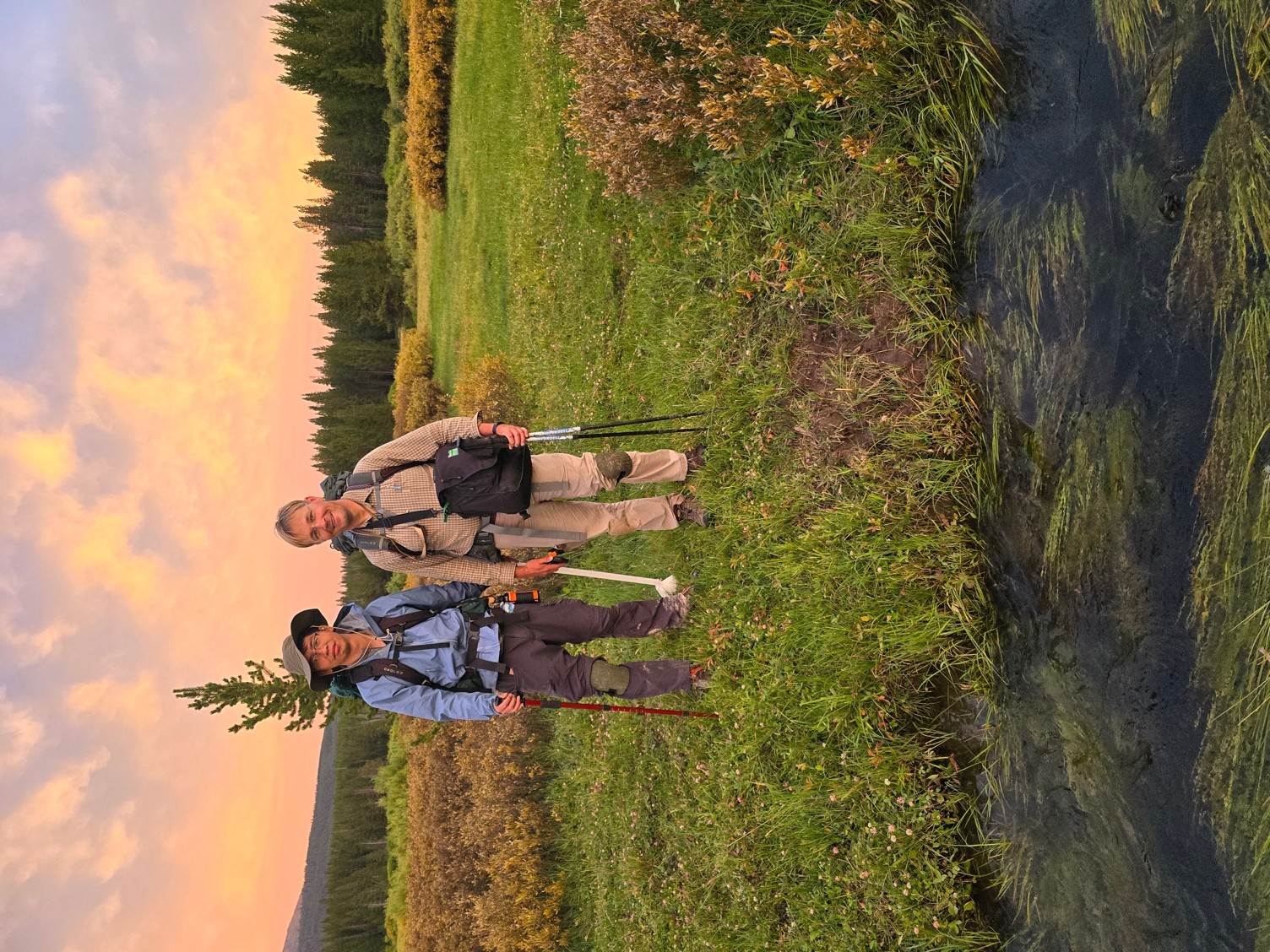
Zhu and Dr. Pal after a tiring day of research in Yellowstone (Photo: Dr. Cox)
Gregorio Umberto Ciullo is a graduate student from the University of Camerino studying conservation biology and environmental management. Through the exchange Ciullo was able to camp in Yellowstone with Montana Tech researchers for two weeks, including a five-day backcountry trip.
“The impact was huge,” Ciullo said. “I worked with Dr. Pal, and we started a project that I may write my thesis on for my graduation. Coming to Montana Tech was an incredible opportunity to learn how research is done in a completely different environment.”
Ciullo noted the rarity of pristine landscapes in Europe. To be able to conduct research in Yellowstone National Park’s protected boundaries was an experience Ciullo holds dear. Ciullo also assisted with Pal’s restoration research on the Butte Hill, and was on Montana Tech campus through summer.
“Working in Yellowstone and Butte showed me how resilient life can be in extreme environments. It was fascinating to see how plants adapt to extreme conditions,” Ciullo said. “Dr. Pal and his team combine practical fieldwork with scientific precision. That’s something I want to bring back to my university.”
The exchange left an impact on Ciullo.
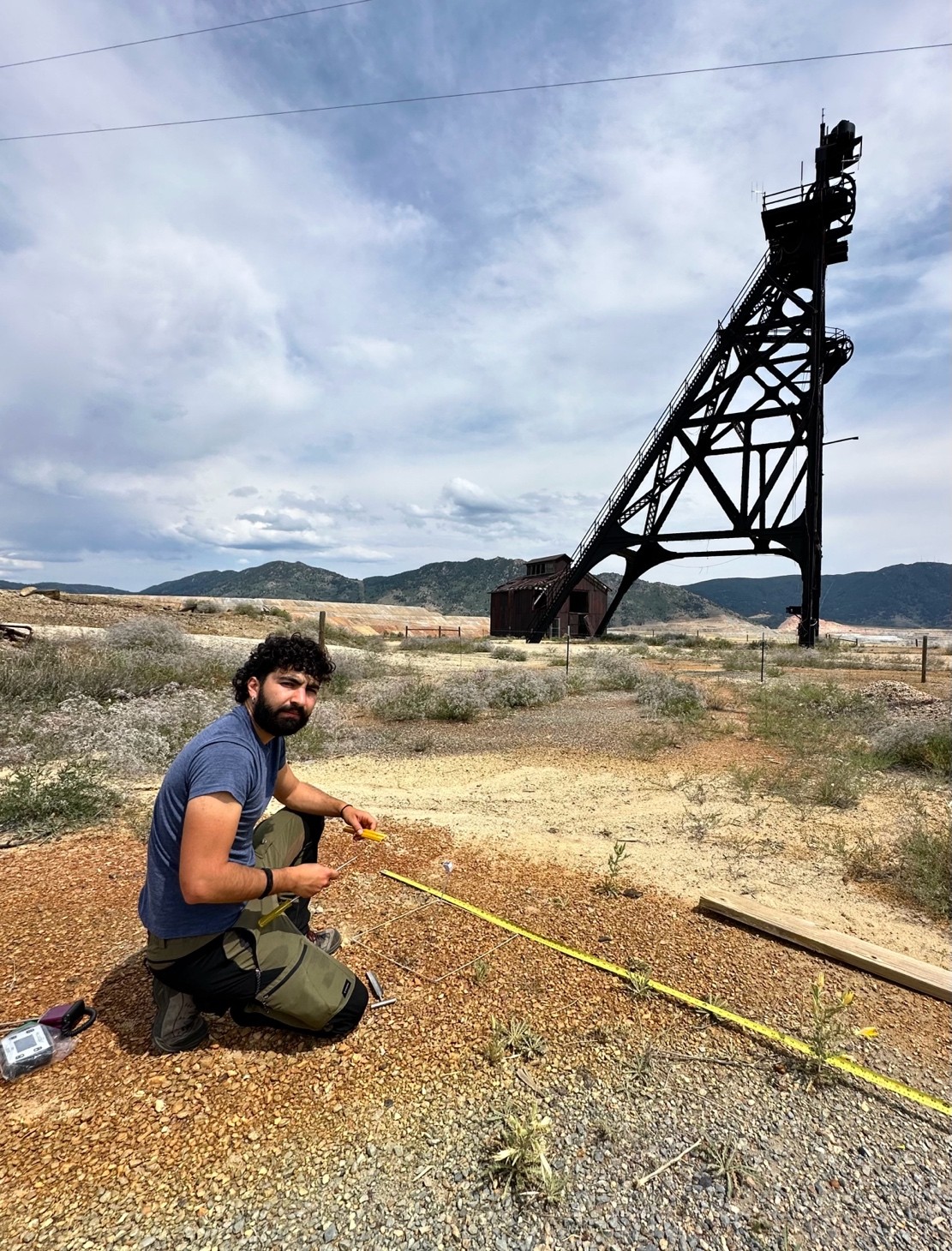
Ciullo working on his research on the Butte Hill
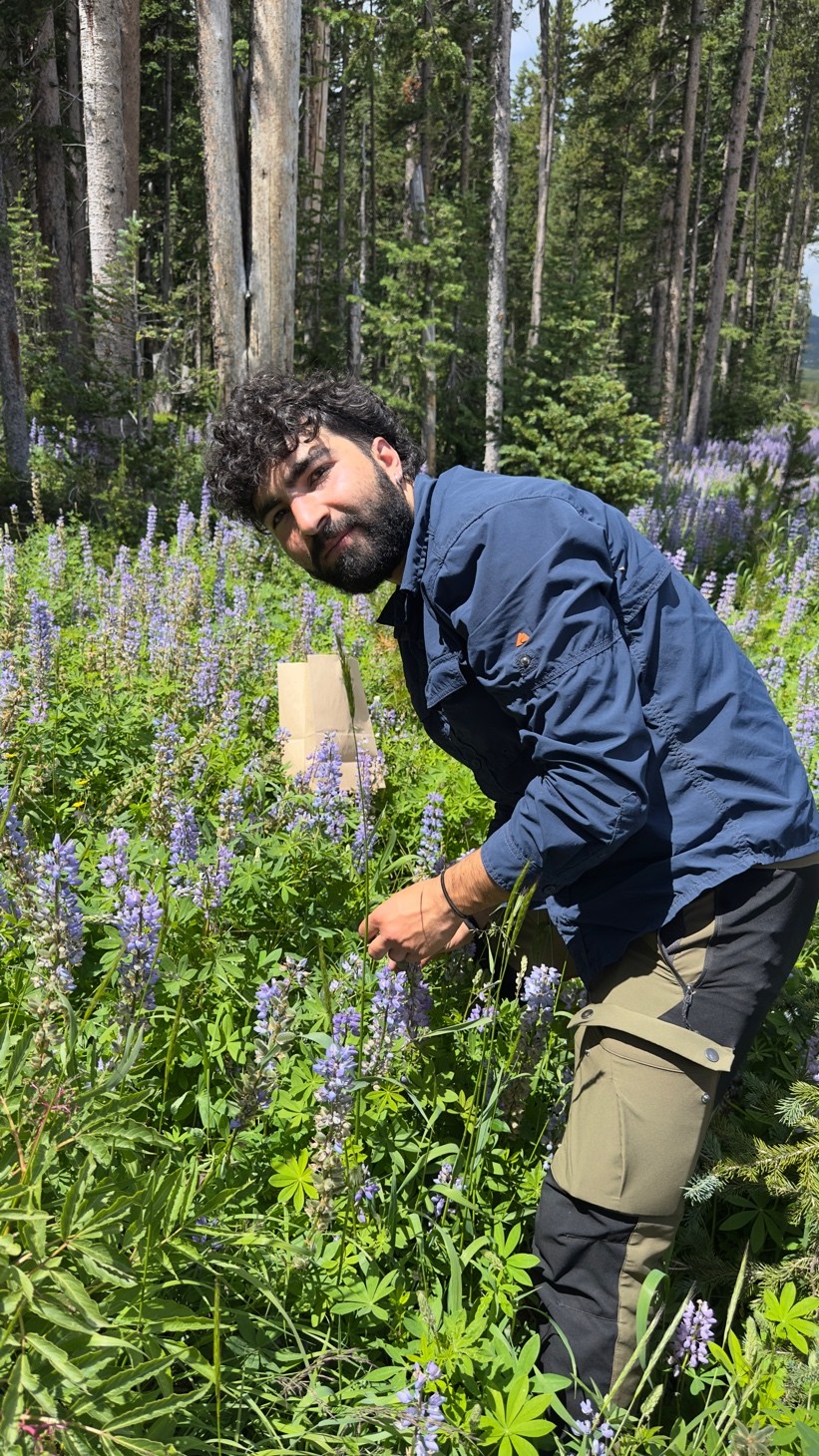
Ciullo working on research with Dr. Pal
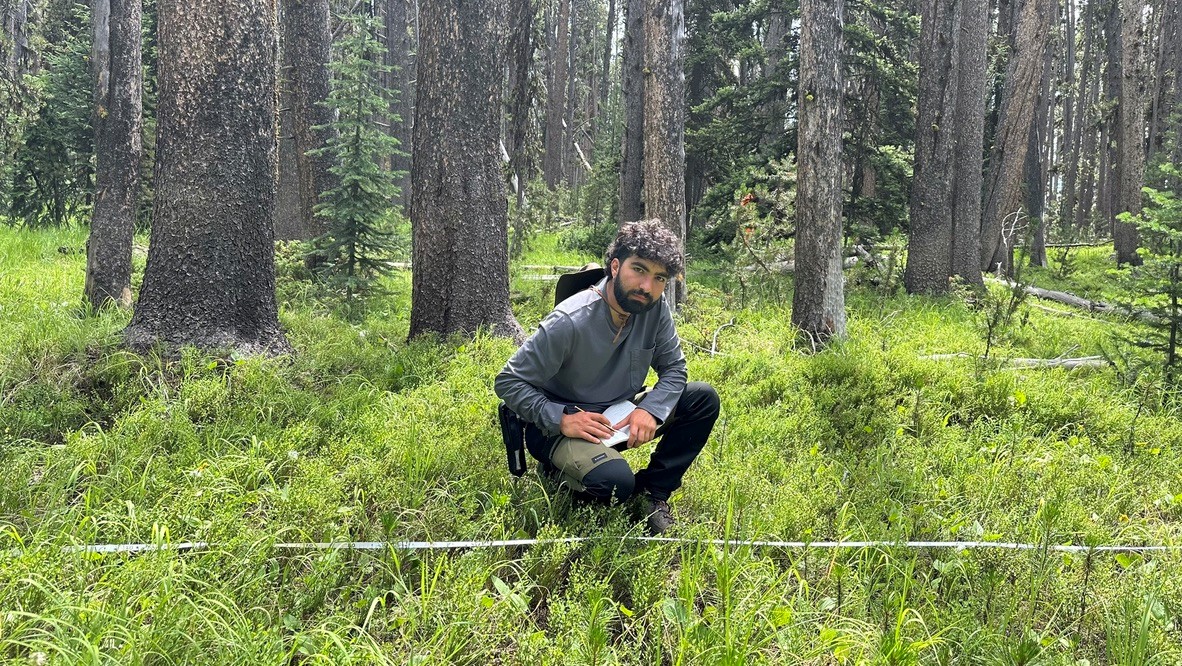
Ciullo working on research in Yellowstone
“I’m very grateful for the Erasmus+ program and Montana Tech for making this collaboration possible,” he said. “It’s something that will stay with me for the rest of my career.”
Ciullo was one of the students Karina Nordwald met while she was in Italy, completing her portion of the exchange.
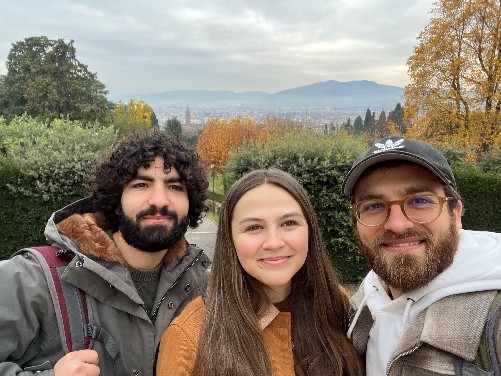
Ciullo and Nordwald in Camerino, Italy
Nordwald is a Montana Tech Ecological Restoration student from Missouri. She enrolled at Montana Tech after a transformative experience completing the Research Experience for Undergraduate (REU) program headed by Dr. Brian St. Clair that showed her that the versatility of her undergraduate degree in biochemistry would allow her to work outside of the medical field. At Montana Tech, Nordwald assists in collecting and analyzing samples collected in Yellowstone National Park.
“I’ve been working with Yellowstone samples, looking at how geothermal features affect plant communities and species diversity. We use X-ray fluorescence to understand the elemental composition of soil. By studying those patterns, we can see how even small details influence ecosystems,” Nordwald said. “It’s a lot of fun — I fell in love with everything here.”
Through the Erasmus+ exchange, Nordwald spent three months in Italy, and absorbed everything she possibly could.
“It was my first time in Italy — and my first time going abroad for something other than vacation,” Nordwald said. It was really great. You can’t go to Italy without learning about the culture. Going as a student, not just as a tourist, you get to learn the academic culture as well as the everyday culture.”
Nordwald said one of the most challenging parts of the experience was how students take their exams.
“Everything is based on one final exam — and it’s oral,” Nordwald said. “You’re face to face with your professor, and everyone is watching. It’s nerve-racking, but it really makes you confident. You have to actually understand what you’re talking about, not just write definitions in a notebook. It forces you to think and communicate like a scientist.”
Nordwald says the Erasmus+ grant made the experience possible.
“I don’t think I could have done the experience without Erasmus+,” Nordwald said. “It didn’t cover everything, but it helped make it possible. It was an extremely valuable experience. Making connections is already important, but when they’re international, it changes your whole perspective.”
Ariana Rivera-Anazco is no stranger to how international experiences can greatly expand one’s knowledge. She was born in Ecuador, spent her childhood in Spain, and met Montana Tech Chemistry and Geochemistry Professor Alysia Cox while Cox was researching and teaching at Yachay Tech in Ecuador, working on an international exchange. Anazco asked Cox about an internship and former Vice Chancellor for Research/Dean of the Graduate School Dr. Bev Hartline helped Anazco travel to Butte and the LEGEND for a summer project.
“I came to Montana Tech and did some toxic mine soil research analyzing metals in several contaminated areas, and I really enjoyed it. It stuck in my heart,” Rivera-Anazco said. “I fell in love with chemistry when it was related to earth sciences.”
Rivera-Anazco enrolled as a Master of Science in Geoscience: Geochemistry graduate program with LEGEND and completed the Graduate Certificate in Ecological Restoration. Through Erasmus+ she was able to travel to Italy for two months.
“I was part of forest management activities, monitoring tree height, plant cover, and soil ecology to understand how the forest is responding to past human intervention in a long-term monitoring project." Rivera-Anazco said. “Monitoring these forests helps us understand how they still provide ecological services like water, habitat, and resources. This experience has opened my mind to multiple research paths - geochemistry, restoration, soil ecology, forest ecology.”
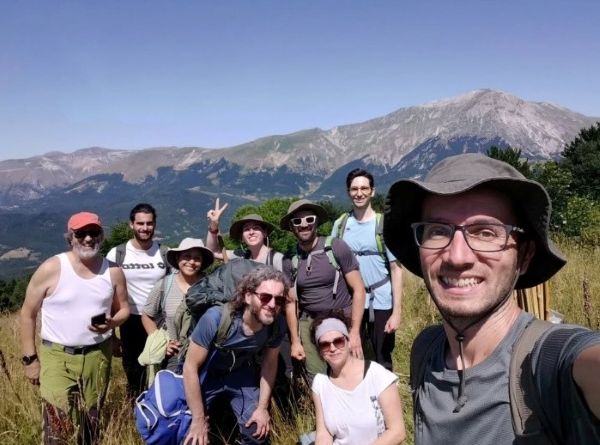
Rivera-Anazco and the Italian team of researchers
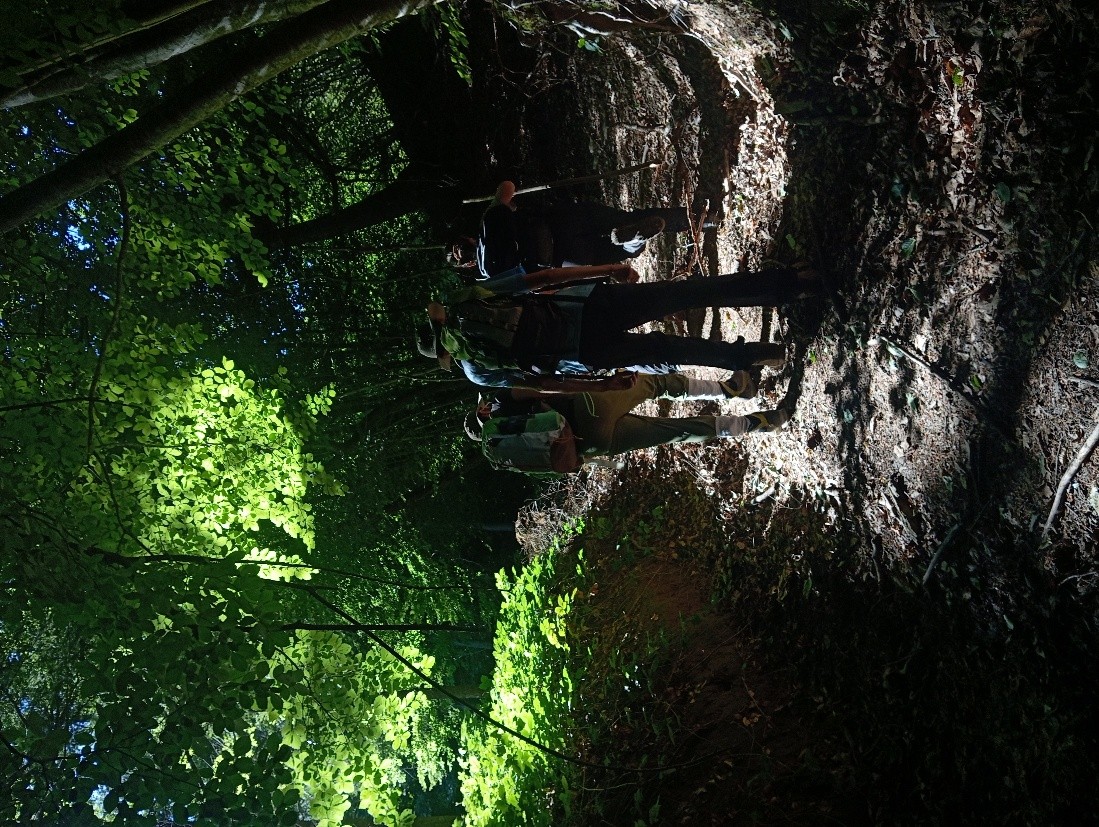
Trail to the Montagna di Torricchio Nature Reserve in Italy
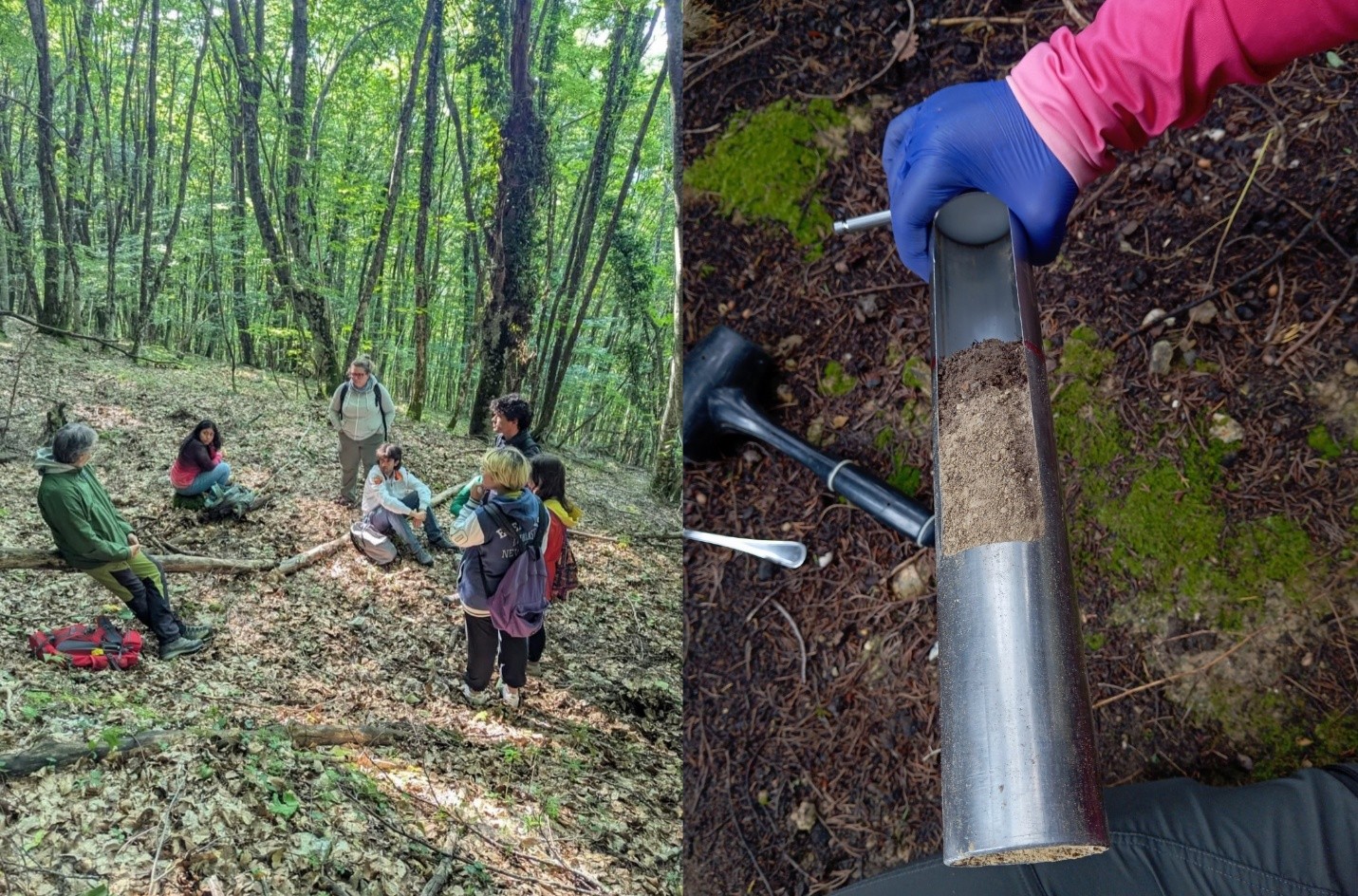
Rivera-Anazco working on research in and Italian beech forest.
Rivera-Anazco also pushed herself to learn the Italian language. She studied for one month and was able to earn a B1 certificate in Italian language, which designates an intermediate proficiency.
Though she’s a scientist, the experience pushed Rivera-Anazco to appreciate Italy in non-scientific ways.
“Italy changed my mindset,” Rivera-Anazco said. “Everything was art - the pillars, churches, every building was majestic. I feel more open to admire buildings, art, and culture now.”
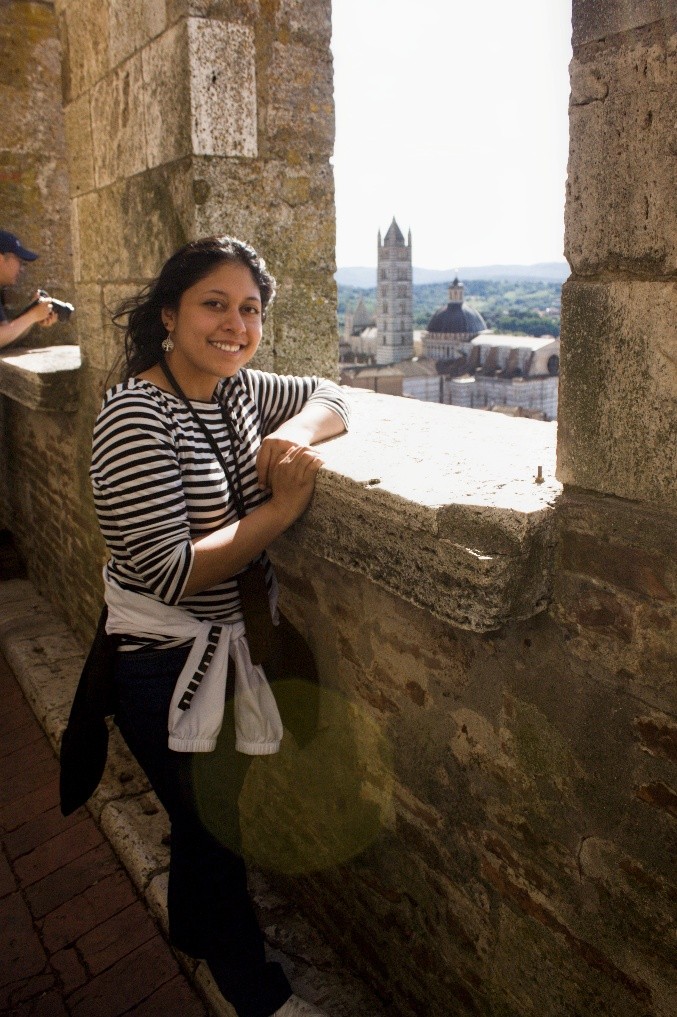
Rivera-Anazco in Siena, Tuscany
She also made friends from around the world.
“I made a lot of international friends from Turkey, Iran,” she said. “We bonded over living together… I optimized my time there. If I just stayed in the dorm, it would have been a waste of time and resources. I did as much as I could without getting tired.”
Rivera-Anazco says she had a clearer focus on her theses because of the experience. She encourages other students to consider international study.
“Take chances,” she said. “Take risks. I traveled alone to Rome for a weekend. Academic paths help you get to these awesome experiences. Do things ahead of time, ask questions, and don’t be shy.”
Zhu, Pal, Cox, and Rivera-Anazco have co-authored a paper on their research “From ashes to old-growth forests: How do long-term changes in forest structure affect understory plant diversity after wildfires in Yellowstone National Park?” that was published in Forest Ecology and Management.